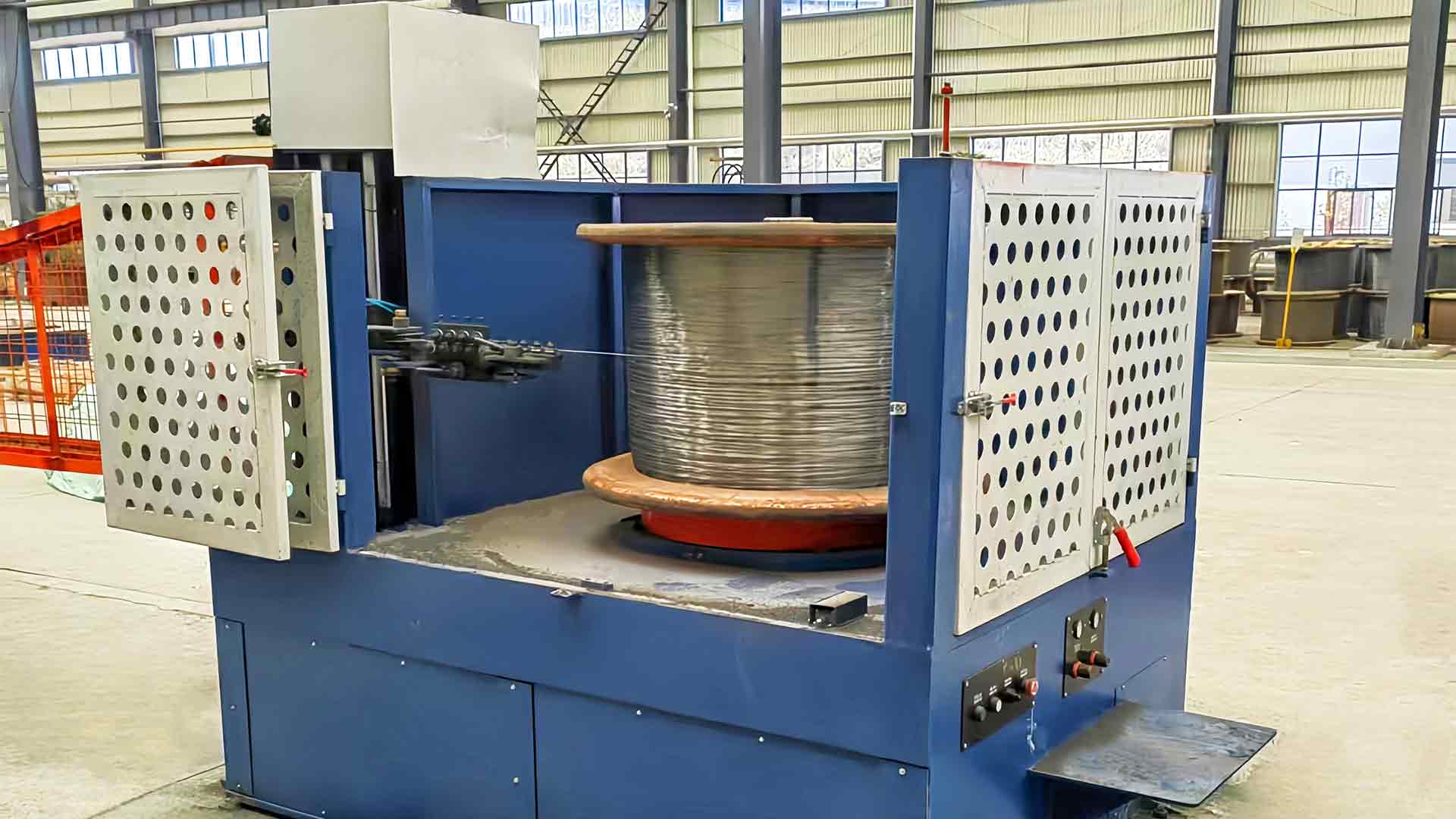

The space requirement difference between compact and industrial Wire Pay-off Machine systems is substantial. In practical terms, compact units typically require 1–3 m² of floor space, while industrial-scale systems often demand 8–25 m² or more, depending on spool capacity, automation level, and integration with downstream equipment such as a wire feeding machine and a wire feed welding machine line. This difference is not only about footprint size but also about operational clearance, maintenance access, and material handling efficiency.
From a user perspective, the selection between compact and industrial systems directly impacts factory layout, workflow efficiency, and long-term scalability. Compact systems are optimized for limited workshops or small production cells, whereas industrial systems are designed for continuous, high-volume production environments where multiple wire reels and automated feeding processes are required.
Physical Footprint Differences Between Compact and Industrial Systems
Compact Wire Pay-off Machine systems are designed with minimal spatial requirements. Most models occupy a footprint of approximately 1–3 m², with a height range of 1.2–1.8 meters. These systems usually accommodate smaller wire reels (often 50–200 kg capacity), making them suitable for constrained environments.
In contrast, industrial-scale Wire Pay-off Machine systems are significantly larger, typically requiring 8–25 m² of dedicated floor space. High-capacity models that handle multi-ton wire spools may exceed these values, especially when integrated with automated tension control systems and overhead feeding rails.
Key Space-Influencing Factors
- Spool diameter and weight capacity requirements
- Presence of automation systems and sensors
- Integration with wire feeding machine setups
- Maintenance clearance and operator access space
Workflow Integration and System Compatibility
One of the most overlooked aspects of space planning is how the Wire Pay-off Machine interacts with downstream production systems. When connected to a wire feed welding machine, compact systems often require direct, short-distance alignment, minimizing transfer space but limiting flexibility.
Industrial setups, however, are designed for modular production lines. A Wire Pay-off Machine may feed multiple wire feeding machine units through guided rollers or overhead conduits, requiring additional lateral and longitudinal clearance. This layout increases total space usage but significantly improves production scalability and reduces downtime.
Typical Integration Configurations
- Compact configuration: single-line feeding into a wire feed welding machine
- Industrial configuration: multi-line feeding with centralized wire feeding machine control
- Hybrid configuration: shared pay-off system serving multiple production cells
Layout Planning, Safety Clearance, and Operational Space
Proper layout planning is critical for both compact and industrial Wire Pay-off Machine systems. Compact systems require minimal clearance, typically 0.5–1 meter around the machine for operator access and maintenance. However, industrial systems require significantly larger safety zones, often 1.5–3 meters of clearance on all operational sides.
The inclusion of heavy spools and automated tension systems increases the need for reinforced flooring and wider access pathways. In environments where a wire feed welding machine operates continuously, maintaining safe spacing is essential to prevent wire tangling and ensure smooth feed rates.
Safety and Maintenance Considerations
- Emergency stop access zones must remain unobstructed
- Operator walking paths should be clearly defined
- Maintenance panels require additional clearance in industrial setups
Application Scenarios and Real-World Space Usage Examples
In small workshops, a compact Wire Pay-off Machine is often placed directly adjacent to a wire feed welding machine, forming a tight production cell of less than 5 m² total area. This configuration prioritizes simplicity and cost efficiency over scalability.
In contrast, industrial manufacturing plants allocate dedicated production zones where multiple Wire Pay-off Machine units operate in parallel. These zones can exceed 100 m² when accounting for storage, movement corridors, and integrated wire feeding machine systems.
Space Requirement Comparison Summary
| Category | Compact System | Industrial System |
|---|---|---|
| Floor Space | 1–3 m² | 8–25+ m² |
| Clearance Requirement | 0.5–1 m | 1.5–3 m |
| Integration Scope | Single wire feed welding machine | Multiple wire feeding machine systems |
| Scalability | Low | High |
Selecting between compact and industrial Wire Pay-off Machine systems depends on production scale, available factory space, and integration requirements. Compact systems prioritize minimal footprint, while industrial systems prioritize throughput and automation capacity, even at the cost of significantly larger spatial demands.